Saturday, January 18, 2014

Sketchbooks, Journals, Notebooks ………....Collecting the Idea; Part I

This post is specifically dedicated to my students…..

I have sketchbooks, journals, notes, notations, diagrams and specs. I have kept them in one form or another since I was a child. The most comprehensive ones go back to my days in high school. I'm always on the lookout for new blank books that can be used at a moments notice to record ideas, jot down quotes, document technical info, add wisdom or a bit of humor. My journals serve as a record, a file, a documentary dictionary and encyclopedia. It is the way I collect my thoughts and try to make sense of experiences, ideas and life, things I want to know and try to understand. I take great pleasure in looking back at those tomes and revisiting my interests and notions over the years.

Much of what I have collected makes sense only to me. That is because I jot, scribble, list, scratch diagrams, stick things in, tear things out, and assemble something that vaguely resembles qualities of hoarding. Literally, I am recording my cognitive thought process on those pages. Some artists are analytical, methodical, and highly meticulous with their journal notations, but more often I find most artists follow a similar process to mine that is along the lines of collecting for contemplation and reference.


A look back in history at journals of iconic artists reveals all sorts of insights into masterpieces that we as viewers may only know as finished works installed in museums. Most are familiar with the highly detailed notebooks of Leonardo da Vinci, who recorded more about science and engineering than art in his journals. Da Vinci was so meticulous and protective of his work that he wrote the text in reverse so it could not be read by outsiders. A more recent artist that comes to mind for copious notes and diagrams is Frida Kahlo whose journals have been published in one form or another and are very popular for studying her life and her art.


Detail: Journals of Frida Kahlo

Detail: Notebook of Leonardo da Vinci
Found items from books and magazines, or a printout from the web, have caused many a sketchbook to split its spine. While my past sketchbooks include torn pages and slips of paper, today I see much of that same content material posted on my Facebook page. I tend to select and share items of interest and humor. Those posts have become a resource and a record for my ideas just like my bound journals have for so many years. An outsider looking at my journals or my Facebook posts would see threads that have followed my thoughts and ideas throughout my career. A musician friend that performs and writes about music mentioned that he now keeps everything electronically on his phone or iPad since he is currently living on a boat in southern California. The forms may be changing, but the inclination to collect, organize, order and revise stays the same.

For this post, Part I & Part II, I invited several friends to share their journaling process and their forms of notation with statements and images. All of the individuals are creatives working in a variety of styles and media.


Deborah Kapoor lives and works in Seattle. Deborah has background in photography, painting and drawing, and is current working in sculpture and installation. Several ways she uses journaling is jotting ideas on Post-It notes, lined note paper, Moleskin journals and small travel journals. Relating to my earlier comment of how Facebook posts have become a journal for me, Deborah mentioned her smart phone has become a way to record notes electronically.

"… to simply jot an idea down before I forget it ­ when I¹m in a hurry.  I have ideas at the oddest times and just worry that I will forget them (because I will), so am constantly writing things on post it notes. Another is on simple lined paper,....  I have always liked the ruled lines, even though I mostly ignore them.  I will do little thumbnail sketches  that are not detailed at all, but gives me a really rough and quick idea of the form I am thinking about, with lots of written verbal description.  I do this A LOT. The words are a way of brainstorming as the ideas come, with no judgment at this time.  I may or may not use any of them." Deborah Kapoor
Deborah Kapoor examples of journaling/notations.
Note the small travel journals that she can carry in a pocket or purse.
I like that Deborah mentioned she delays or avoids judgement at this early stage of collecting notations. I emphasize to my students the importance of delaying judgement in the early stages of brainstorming ideas. Also, for organizing purposes Deborah uses typical manila office folders and files notes according to topic or project. 

Terry Jarrard-Dimond lives in Clemson, South Carolina where she works in fibers as surface design and sculptural form. On the issue of netting a fleeting idea she says,
"Anyone who doesn’t keep some type of notes on ideas for future work in my opinion is really playing fast and loose with their creativity.  You have a flash of an idea and you think you will remember it but often what seemed so vivid one minute can fade very quickly in our fast paced modern world.

Terry Jarrad-Dimond journals and notebooks. Note the office-organizer tabs she uses.
I keep journals with thumbnail sketches, written notes, tear sheets of images that catch my eye, scraps of fabric that don’t make it into completed work, file cards with ideas scribbled on them, color samples and anything else which might go into the stew of art making.  Sometimes things get pinned to my wall where I study them in a casual way.  Other times items just float around my studio where I discover and rediscover them as materials get shifted and sorted. My journals serve the singular purpose of igniting ideas that can be developed into finished works of art." Terry Jarrard-Dimond


Also living and working in South Carolina, artist Debbie Cooke told me she has kept journals for over thirty years. Her journals like her life, are an evolving process.

Journals by Debbie Cooke. Notice hr collections include tiny 
watercolors, pressed leaves, stamps, notes & diagrams
"In the beginning, I purchased journals and carried them to be able to record observations and ideas---some writings and drawings were for inspiration, and some were notes and sketches just as record. I found myself thinking, "I wish this journal was smaller, lighter, had better quality paper, etc."......and so I began making my journals. Because I designed it to easily fit in a camera bag or pocketbook, I began carrying them with me.... and my entries became less about ideas for new work, and more about my observations...more drawings, watercolors, and collage accompanied my writings….I still collage random objects---sugar packets, labels, ticket stubs, etc. These would serve as writing prompts for my musings, which would often lead to Internet searches on things I wanted to know more about "…Debbie Cooke


In 1997 when Debbie accepted a position teaching photography, her journals underwent a major change becoming more about writing, notations and musings, and less about images since she was capturing those with the camera. Now that she has retired from teaching her studio work is focused on the gum dichromate photo process, known for demanding precision to gain success. Her journals now reflect detailed notes on chemistry, times, humidity, etc. Because these are based on utility, she pointed out they do not "feed my soul" as the previous books. Her solution has been to revisit her earlier process of collection by maintaining a separate journal for observational and musing purposes.


In Part II we will look at more collections and musings by creatives and I will share my personal collections.

Sunday, December 29, 2013

Ending the Year 2013

I tend to live by "the cup is half full" philosophy, so ending one year and looking to a new one always energizes me and gives me reason to reflect back and look forward with fresh eyes.

With several weeks of time away from my teaching and administrative duties at the university, I get a chance to spend full days in the studio. The first day or two is like warming up for a workout or sun salutations we do beginning yoga class. I have to get both mind and body into my place, that space where I work and explore ideas from the countless lists and notations I collect in books, bags and pockets. Once the salutations are completed, the work process flows like water in a stream.

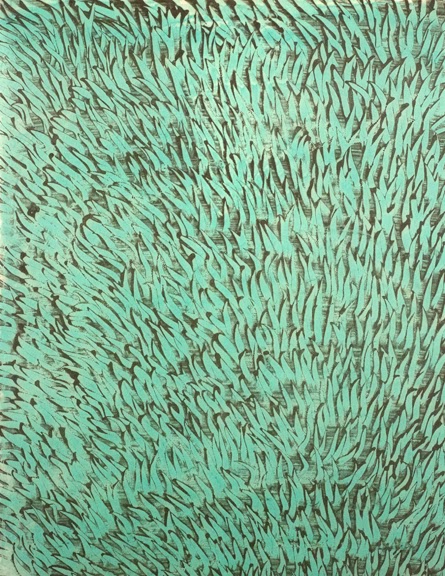
This last week has been productive and rather than dwell on more details, I share with you a series of new monotypes that will end 2013. The Apparition series of monotypes. Each print is unique, 24 X 18" on Japanese rice paper using wax, pigment and graphite. Details on sales or exhibition can be found on my website: www.janenodine.com .

Enjoy and…

HAPPY NEW YEAR!!


In the Studio

Nodine.apparition.54

Nodine.apparition.58

Nodine.apparition.60

Nodine.apparition.72

Nodine.apparition.77

Nodine.apparition.65

Nodine.apparition.67

Nodine.apparition.69

Nodine.apparition.71

Nodine.apparition.78

Nodine.apparition.80

Nodine.apparition.75

Friday, December 6, 2013

Time Flies When You're Having Fun?

Looking at the current date, and my last post, It's obvious something has held my attention for the past year and a half. Christmas will soon arrive and I feel like it was just days ago I was throwing out the tree from 2012. Speaking of a tree, I recently posted on FB that I need a hologram of a Christmas tree for my den. With all the "Likes" it received, it's clear there are many others who would be happy to have a projection of a decorated tree to satisfy their family and make for a quick and easy clean-up. 

So, what's been keeping me from posting here? Life. Oh I've had plenty going on in the studio, but I also have family, work and professional commitments. It's just a bit startling when you realize how quickly 17 months can pass. So for 2014 I plan to look at my landscape of commitments and responsibilities, and see what I can reorganize, delegate, delete and streamline in order to be more productive and effective. In 2012 I began a commitment to yoga that has been a rewarding process. Keeping that factored into my life and schedule, I want to make more choices that are beneficial and rewarding.


Earlier this year I was fortunate to be included in several national exhibitions connected with the Seventh International Encaustic Conference held annually in Provincetown, MA. Swept Away: Translucence, Transcendence in Contemporary Encaustic was held at the Cape Cod Museum of Art in Dennis, MA, The Calligraphic Gesture was at Tao Water Gallery in Provincetown, Natura Viva: Flora, Fauna and Us was at the ArtCurrent Gallery in Provincetown, and Seven was exhibited at the Truro Center for the Arts at Castle Hill. I've linked these with details since several of the exhibits are traveling and available for future scheduling. Below I'm  sharing  a group of monotypes I exhibited as an installation in The Calligraphic Gesture, Tao Water Gallery, and this fall at the Spartanburg Art Museum and Riverworks Gallery in Greenville, SC. I  plan to spend some of my holiday time in the studio woking on new monotypes for an up-coming solo exhibition I have scheduled at Goodall Gallery in February 2014.


© 2013 Jane Allen Nodine
Each panel, 9 X 12". Installation size variable. 
Media: Pigment, graphite, wax and ink on Japanese rice paper.


Panels In situ, Tao Water Gallery, Provincetown, MA © 2013


Sunday, July 8, 2012

Governor Nikki Haley; First, Not Necessarily Best

Governor Nikki Haley is the first female and first minority governor in the history of South Carolina. Both are significant accomplishments for the state that was also first with a European settlement-1526, first public library-1700, first professional female artist-1707, first opera performed-1735, first musical society-1762, and the first public museum-1773 (see list). 

But Governor Haley, supported and elected by the Tea Party, has waged an on-going battle with the Arts in South Carolina, and is determined to see the demise of the South Carolina Arts Commission, the autonomous state agency created by the state legislature in 1967 "to build a thriving arts environment for the benefit of all South Carolinians". Due to the Governor's actions this week the Arts Commission web page states, " The governor has vetoed all funding for the South Carolina Arts Commission. Due to the unprecedented timing of these vetoes the Arts Commission office will be closed pending legislative action on the vetoes. "

For this post I find it is necessary, once again, to speak out in favor of public arts support. I am posting an open letter I wrote Governor Haley last year when she vetoed funding for the SC Arts Commission and support for SC ETV, our arm of Public Television. Whether she saw my letter or not, I do not not know, but I did receive a form letter from her office that I will look for and include at the end of this post in the next day or so.


January 23, 2011

To Governor Nikki Haley,

Life without the arts and ETV will:

Leave bookshelves empty of scholarly literature that informs and entertains, it will close doors to museums, theatres and galleries where live performances of music, dance, drama and art move souls and inspire the next generation to use creative forms to interpret the human condition and make sense of our complexities, it will snuff-out creative after-school programs that offer young minds a chance to learn new skills for creative and critical thinking that can be used to move into higher education and toward productive careers and participants in community--(it will offer them a life and opportunity away from ignorance and poverty, prevalent in SC). 

What will it be like when the music is gone? The silence will spread like a deafening wave, a social tsunami that crosses the world through the instant access of social networking. The masses will gasp as they see South Carolina’s decision to disband and dissolve the arts and Educational Television that airs programs revered by viewers across the nation. 

In 1982 the National Endowment for the Arts established the NEA National Heritage Awards as a way of honoring American folk artists for their contributions to our national cultural mosaic and modeled after the Japanese "National Living Treasures" concept. In 2010 Mary Jackson, a native sweetgrass basket maker on John’s Island, South Carolina, received the award from the National Endowment for the Arts. In 2008 Jackson received a United States Artists Fellowship, and that same year she was awarded the most coveted recognition in American Art, the John D. and Catherine T. MacArthur Foundation grant in the amount of $ 500,000.00. Mary Jackson’s work is included in collections worldwide including Empress Michiko of Japan, Prince Charles, Renwick Gallery, the American Craft Museum, White House Collection of Arts and Crafts, Museum of Fine Arts, Boston, and Museum of African American History, Detroit. This single artist’s work is a jewel of grand PR in the coarse clay and gritty sand of the South Carolina terrain. Had she not received support from the South Carolina Arts Commission we could not celebrate this marvelous treasure.


                                   Artist, Mary Jackson, sweetgrass basket


********************
UPDATE: July 18, 2012
********************

The People of South Carolina have spoken. The legislators have heard their voices and restored funding originally cut by Governor Haley.


"House overrides vetoes; Money restored for arts, rape crisis centers, teacher raises


Arts Commission

After a statewide campaign and a rally in Columbia, arts advocates also won Tuesday as the House voted 110-5 to restore $1.9 million for the S.C. Arts Commission and voted 89-25 to restore $500,000 for the commission's grant money."
See details: The State


Friday, June 15, 2012

I'm Back in the Saddle Again....out where a friend is a friend.....

Made famous by Gene Autry in the 1940's, and later rewritten, updated and energized by Aerosmith, Back in the Saddle, is a good metaphor for getting back into the studio. So in this post I'm sharing a few new pieces recently completed and slated for one or more of several exhibits I have scheduled for the fall and winter. I hope you're being productive, either gathering new ideas or applying them in your studio. 

Venetian Lace, traces, and terra ignota, are three series of work with recent examples shown below.


Venetian Lace developed when I began experimenting with various color combinations and tree resin. Early results immediately reminded me of the beautifully textured and colorfully weathered walls of Venice Italy.  Further exploration of the process rendered rich textures and patterns that were pleasantly reminiscent of my Italian travels when I was teaching in the summers from 1999 to 2008. This technique reveals the luminous layers and play of lacework in the series. 


Venetian Lace.21 © 2012 size: 33 X 12"
encaustic wax, pigment, resin on panel


trace, is a theme I have used for many years with 
emphasis on memory as related to record, trace elements, or the vestige of some past activity. The non-objective abstractions in this group incorporate naturally occurring marks and patterns made from iron oxidation, better known as rust, and include burn marks, extraneous marks and monotypes. As the patterns and layers develop, some elements become obscured in the hazy film of the wax, as others become more evident and appear to float or come forward in the luminous properties of the material. 


trace.103 © 2012 size: 22 X 19"
encaustic wax, ink, iron oxidation, resin on panel


Most recent is the terra ignota series. Loosely translated as uncharted territory or unknown land, I felt the term fitting for work that seems to be taking a new direction...into the unknown.


terra ignota.03 © 2012 size: 12 X 24"
wax, pigment, resin, ink, rice paper on panel


terra ignota.02 © 2012 size: 20 X 24"

encaustic wax, iron oxidation, graphite, resin, pigment on panel


terra ignota.01 © 2012 size: 22 X 19"
ncaustic wax, iron oxidation, graphite, resin, pigment on panel 


Thursday, May 24, 2012

Vantage and Scale; When Ordinary Becomes Extraordinary. Cornelius Völker at the Von der Heydt - Museum

In March I had the opportunity to visit Wuppertal, Germany for the opening of my solo exhibition WACHSSPUREN at the Gallerie Kunstkomplex. In earlier posts I gave details about my travels and the exhibition, but I have not had a chance to post about a worthy painting exhibition I saw at the Von der Heydt Museum located in the city of Wuppertal. 

I started out one morning walking to the mid-town Museum location to meet my friend and artist Bodo Berheide, where we planned to see a newly installed exhibition of German Expressionism. How appropriate to be in Germany to see this exhibit, and I was looking forward to works that might be more obscure in the big picture and may not have traveled as widely as many well know iconic works from the period. Big disappointment, when we arrived we found the installation "still in progress" and were informed the show would not officially open for several days. We had seen posters for another exhibition that was located at the Museum's crosstown facility so we so we caught the rail and walked across town. The ads and posters for the Cornelius Völker exhibit,  gave a modest indication it was a figurative painting exhibition. 

Bodo and I were pleasantly surprised when we entered the museum to find a powerful exhibition of large-scale, lushly painted works that included subjects of the ordinary and mundane, that of insignificance, waste and detritus, and all charged with an energy beyond their material intent. The work of Cornelius Völker is compelling, not just for the scale and vantage of his subject matter, but also for the swift spontaneous strokes of rich thick paint lathered onto the surface with skillful mastery.

Völker, born in Kronach, Germany, studied at Kunstakademie DĂĽsseldorf under Dieter Krieg. While Völker has exhibited in the US, the majority of his activity has been in Germany, with notable sites in Belgium, Norway and Austria. The exhibition in Wuppertal continues to the end of May. For more details on the artist visit his website: Cornelius Völker


Hands 2003 oil on canvas 78.7 x 118.1 inches


Hands 2003 oil on canvas DETAIL


Hands 2003 oil on canvas DETAIL


Bodo in front of Hands painting shows a sense of scale.


Gallery Installation View.


Books 2007 oil on canvas 118.1 x 70.9 inch


Books 2007 oil on canvas DETAIL


Lighter 2009/2010 oil on canvas 94.5 x 63.0 inch


Browning GPDA 2009 oil on canvas 39.4 x 41.3 inch


Smith & Wesson Detetive Specialt 2009 oil on canvas 39.4 x 41.3 inchs


Man 2007 oil on canvas 74.8 x 55.1 inch


Man 2007 oil on canvas DETAIL

Thursday, May 17, 2012

What's it all about, Alfie ?

Summer mini-exhibit 1

I love to hear Dionne Warwick sing the song from Alfie, the film about the quirky character played by Michael Caine who occasionally breaks from role to address to the screen audience. In this post I'm beginning my summer mini-exhibits, and I've selected three works I made in the late nineties that often draw the same question from the viewing audience; What's it all about? 


perforation, transfer print & graphite on prepared paper © 1999, size: 37 X 41"


perforation, detail


obsession, transfer print, acrylic & graphite on prepared paper
© 1997, size: 30 X 21"


distressed image II, transfer print, oil & graphite on prepared paper on panel
© 1997, size: 62 X 44"